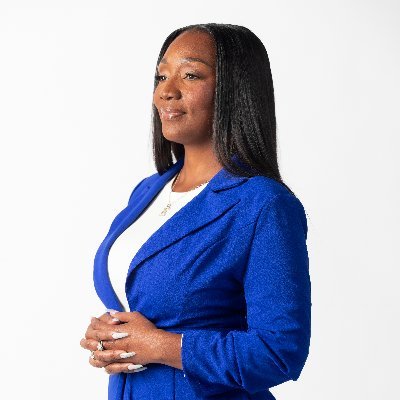
Shonique Williams is an American civil rights advocate and community organizer who ran as a Democrat for the U.S. House of Representatives in California in 2026. Her full public name is Shonique Williams, and none of the sources reviewed for this article gives a middle name. Her exact place of birth has not been published in any source that could be verified, so it is not stated here. Reporting says she was raised in Southern California.
Williams became known through criminal justice reform work shaped by her own experience of a wrongful conviction. She has worked as a statewide organizer on incarceration and mental health policy. In late 2025 she launched a campaign for a newly created congressional district. This biography sets out what is publicly documented about her life and work, and it flags where sources disagree or where information is missing.
Shonique Williams Early Life
Williams’s date of birth has not been publicly confirmed, so none is given here. One magazine profile describes her as a millennial. That would place her birth somewhere between the early 1980s and the mid 1990s, but this is an estimate and not a verified fact.
Her place of origin is also only partly documented. She is described as having been raised in Southern California. That region covers Los Angeles, Orange, Riverside, San Bernardino, and San Diego counties, along with many cities and suburbs. No source names her hometown or the neighborhood where she grew up. A profile of her campaign lists Los Angeles County as the area where she is based. Her campaign committee’s federal filing lists a mailing address in Rancho Mirage. That is a campaign address and should not be read as her place of origin.
Accounts of her childhood stress hardship. One profile says she was raised by a mother who relied on welfare. Her campaign biography says she went through foster care and homelessness as a young person. The two accounts emphasize different things, and no source gives a full timeline.
On education, she is described as a first generation college graduate. Her campaign biography said she was in her final year at Purdue Global Law School, with graduation expected in April 2026. No source reviewed confirms that she completed the degree, so it should be treated as expected and not as a confirmed fact.
Shonique Williams Career
Williams has worked in several fields rather than one profession. Reporting says she has been an organizer, an advocate, a small business owner, and a worker in the legal field. Her best documented work is in criminal justice and civil rights organizing.
Organizing with Dignity and Power Now
She has been identified in public events and statements as a statewide organizer for Dignity and Power Now. She has also been described as an organizer for the NO CARE Court Coalition. In this work she speaks publicly on how policy affects people who are or have been incarcerated, and on how those policies reach their families and communities.
Opposition to CARE Court
A large share of her public record concerns CARE Court. This is a California program, created by state legislation in 2022, that lets a court order a care plan for certain people with serious mental illness. Supporters say it connects people to treatment. Critics say it relies too much on courts and not enough on voluntary services and housing.
Williams belongs to the critics. In a statement reported in news coverage of the state budget, she said the framework was not a true model of care and described it as an addition to the carceral system. She also appears as the lead author of a letter from advocates opposing the CARE Court legislation. She joined an ACLU of Southern California webinar on housing and courts, alongside Susan Mizner, who directs the ACLU Disability Rights Program.
Work with the Women’s Foundation California
The Women’s Foundation California lists her as a statewide organizer focused on criminal justice reform. Her profile there says she wants to protect the dignity of people who are incarcerated, as well as their families and communities.
The same profile says she hopes to change how incarcerated people are treated through policy, legislation, and effective implementation, one state at a time. It also names the Thirteenth Amendment as a target. That amendment, ratified in 1865, abolished slavery and involuntary servitude but kept an exception for punishment for a crime. Reform advocates have long argued that this exception allows forced prison labor, and Williams has said she wants it ended.
Statewide Campaigns and Legislation
She is credited with contributing to statewide efforts including the Women’s Dignity Campaign and Ban the Box legislation. Ban the Box refers to policies that stop employers from asking about criminal history on the first job application. The goal is to let people with records be judged on their skills before their past comes up. The sources do not describe exactly what role she played in each effort, so this article does not claim more than that she contributed.
Legal Advocacy and Small Business
Her campaign biography calls her a legal advocate who has worked in community organizing and public policy. One profile says she founded an advocacy organization to help keep others from facing what she faced. That organization is not named in the sources found, and its details could not be verified. Her small business work is mentioned in reporting without any further description.
Shonique Williams Wrongful Conviction and Advocacy
The experience that shapes her public identity is a wrongful conviction. She was wrongly convicted and incarcerated in her early twenties, and she says this led her to civil rights work. Her campaign biography describes her as a survivor of domestic violence. A magazine profile says she was imprisoned while trying to escape an abusive relationship.
The sources differ on how long she was imprisoned. The Women’s Foundation California says the wrongful conviction led to a two year prison sentence. The magazine profile says she was released after a year. Both are accounts published by or about her, and this article does not pick one. Readers who need the exact figure should look for court records or a direct statement from her.
She has said that people who serve the community should reflect the community, and that lived experience gives an advocate credibility. That idea runs through her organizing and her campaign.
Shonique Williams Run for Congress
Federal records show that Williams filed a statement of candidacy for California’s 41st Congressional District on November 13, 2025. The district exists because voters passed Proposition 50, which opened a new seat. It covers communities across east Los Angeles County and west Orange County.
When she announced her run, she said she wanted leadership that understands struggle and fights for opportunity, and she named housing, mental health, education, and community driven public safety as priorities. A profile described her platform as centered on civil rights, with attention to Black, Brown, and marginalized communities, alongside economic justice and affordability.
Federal Election Commission data shows her committee, Shonique Williams for Congress, reported about $66,597 in total receipts between October 2025 and September 30, 2026. That is the most complete figure found. Another site reported a lower number, about $27,000, which was likely from an earlier period.
The primary took place on June 2, 2026. The Midterm Project lists her as eliminated in the primary. A candidate page from Courage for Democracy also shows that she did not advance. One election tracking site lists her as first place in the primary. That conflicts with the other two sources, so this article relies on them.
Shonique Williams Public Statements and Recent Attention
Williams has continued to speak publicly after her campaign ended. In November 2026, she addressed the Westminster City Council during public comment at a special meeting, where she criticized city leaders over a street named for Charlie Kirk. One entertainment news outlet reported that she used profanity and invoked the First Amendment, and that the exchange sparked debate on social media. Coverage varied in tone, and readers can watch the public meeting record to form their own view.
A video clip of her also circulated widely in August 2026 and drew comment from political commentators. In July 2026, she paid tribute to Eric Washington, a Grambling State alumnus who died in a shooting in Los Angeles, saying he gave his life to his community.
Shonique Williams Personal Life
Williams keeps most of her family life out of public view. No reliable source reviewed for this article names a spouse, partner, or children, and none is assumed. What she has chosen to share concerns her difficult early years, her time in foster care and homelessness, and her experience of domestic violence. She links these experiences to her advocacy.
She describes herself as a Black woman and a civil rights leader, and she says that lived experience shapes her commitment to policies grounded in community needs. She is described as a progressive Democrat.
Shonique Williams Legacy and Public Impact
At this stage of her career, her impact is best measured in advocacy and public debate rather than in office held. She has added to California’s discussion of CARE Court, incarceration, and the dignity of people in prison. Her story also shows how lived experience can move someone from organizing into electoral politics.
Her future path is not set. She has not announced a next campaign in any source found, and this article makes no prediction.
Conclusion
Shonique Williams is an American advocate whose public work grew out of a wrongful conviction and early years marked by instability. She has organized statewide on criminal justice reform, spoken against CARE Court, and in 2026 ran for Congress in California’s 41st District, though she did not advance past the primary according to the most reliable sources found.
Some basic details, including her date and place of birth, are not publicly documented. A few other facts, such as the length of her sentence, are reported differently. This biography states those gaps plainly and will be updated if verified information becomes available.
FAQs
Who is Shonique Williams?
Shonique Williams is an American civil rights advocate and organizer who has worked on criminal justice reform in California. She was a Democratic candidate for the U.S. House in 2026.
Where was Shonique Williams born?
Her birthplace has not been published in any verified source. Reporting says she was raised in Southern California.
How old is Shonique Williams?
Her date of birth is not public. One profile calls her a millennial, which suggests she was born between the early 1980s and mid 1990s, but that is an estimate.
What office did Shonique Williams run for?
She ran for the U.S. House of Representatives in California’s 41st Congressional District, which covers parts of east Los Angeles County and west Orange County.
Did Shonique Williams win her primary?
No reliable source reviewed says she advanced. The Midterm Project and Courage for Democracy both indicate that she did not, while one tracking site lists her as first place, which conflicts with those two.
What is Shonique Williams known for opposing?
She is widely quoted as a critic of California’s CARE Court. She argues it adds to the carceral system rather than providing true care.
Is Shonique Williams married?
Her marital status is not publicly documented, and she has not shared it in the sources reviewed.