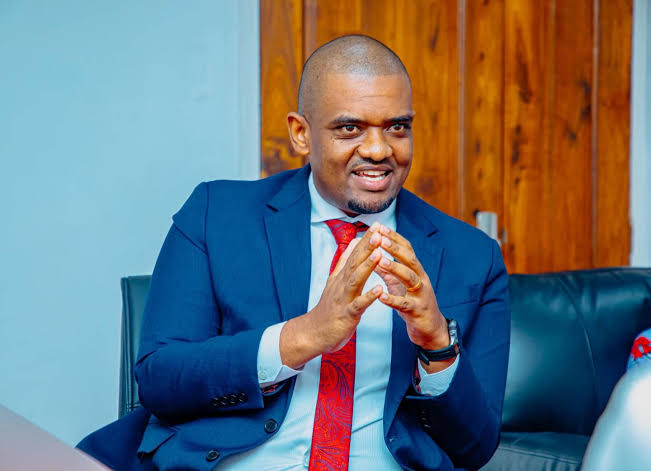
Deogratius John Ndejembi Biography
Deogratius John Ndejembi, widely known as Deo Ndejembi, is a Tanzanian politician whose path has taken him from private sector roles and district administration to senior cabinet positions and a nomination for the vice presidency. Born and raised in the Dodoma region, he has built a career marked by steady progression through party structures, parliamentary service, and executive responsibilities under the Chama Cha Mapinduzi (CCM) government.
This biography presents a clear account of his background, education, professional experience, and public service. It draws on publicly available records from parliamentary profiles, official announcements, and contemporary reporting to offer readers an accurate picture of his journey and contributions.
Deo Ndejembi Early Life
Deogratius John Ndejembi was born on 12 July 1983 in the Dodoma region of Tanzania. He holds Tanzanian nationality and has remained closely connected to central Tanzania throughout his life and career. Dodoma Region forms the geographic and political heart of the country. It became the official capital following a government decision in the 1970s, with the National Assembly and many administrative functions later relocating there. The region’s semi-arid climate, central location, and agricultural base have shaped the lives of generations of residents, including those from Chamwino and nearby districts.
Ndejembi’s early years unfolded against this backdrop of a region transitioning from a primarily rural and pastoral setting into a growing administrative centre. The predominant ethnic group in the area is the Gogo (Wagogo), known historically for agro-pastoral livelihoods centred on livestock and drought-tolerant crops such as sorghum and millet. Chamwino District, which he later represented in Parliament, covers a substantial area of the central plateau and relies heavily on farming, livestock keeping, and related activities. These local realities of seasonal rainfall, land use, and community development provided the practical context in which Ndejembi grew up and later returned to serve.
Public records do not detail specific family circumstances or childhood anecdotes beyond the documented place of birth and subsequent schooling. What is clear is that his formative environment was the Dodoma area, where he completed primary education and began secondary studies before advancing further.
Deo Ndejembi Education
Ndejembi’s formal education followed a structured path from primary school in Dodoma through secondary studies and higher education abroad and in professional programmes. He attended Cannon Andrea Mwaka Primary School from 1988 to 1995, where he obtained the Certificate of Primary Education Examination. He then proceeded to secondary education, attending Jamhuri Secondary School and Kigurunyembe Secondary School, completing the Certificate of Secondary Education Examination around 1998–1999.
For advanced secondary studies he enrolled at Merton College from 2002 to 2004, earning the Advanced Certificate of Secondary Education. Between 2006 and 2009 he studied at the University of Lincoln in the United Kingdom, graduating with a Bachelor’s degree in International Relations. From 2009 to 2012 he pursued an Advanced Diploma at the Institute of Administrative Management. Later, between approximately 2019 and 2021, he completed a Master’s degree at the University of Cumbria.
This combination of international relations training, administrative management qualifications, and practical experience equipped him for both private-sector leadership and public administration. The focus on international relations provided a foundation for understanding broader policy contexts, while the administrative diploma supported organisational and governance skills that later proved useful in district and ministerial roles.
Deo Ndejembi State of Origin and Regional Context
Dodoma Region holds a unique place in Tanzania. Declared the capital in the 1970s, it has hosted the National Assembly and key government institutions, with significant infrastructure development accelerating after the formal relocation of many offices. The region consists of several districts, including Chamwino, Kongwa, Bahi, Chemba, Kondoa, Mpwapwa, and Dodoma City. Chamwino District, where Ndejembi has served as Member of Parliament, spans thousands of square kilometres of semi-arid terrain on the central plateau. Agriculture and livestock remain central to the local economy, with crops such as sorghum, maize, groundnuts, and sunflower common, alongside pastoral activities.
The Gogo people form the majority ethnic group, with smaller communities of other groups present. Traditional practices, including music and dance forms associated with the Gogo, continue to feature in community life. Challenges such as variable rainfall, soil conditions, and the need for improved infrastructure have long shaped development priorities. As District Commissioner of Kongwa and later as MP for Chamwino, Ndejembi engaged directly with these local realities, focusing on projects in education, health, and transport connectivity.
The region’s central location also positions it as a strategic link for national transport and administration. Understanding this setting helps explain the practical orientation of Ndejembi’s early public service and his continued emphasis on constituency development even as he took on national portfolios.
Deo Ndejembi Career
Ndejembi’s professional life began in the private sector before moving into public administration and politics. His career demonstrates a clear sequence of increasing responsibility.
Private Sector Experience
In 2012 Ndejembi worked as a manager at A1 Outdoor. From 2012 to 2014 he served as Head of Sales at Smile Communication. He then joined Tigo as Zonal or Regional Manager from 2014 to 2015. In 2016 he held the position of Head of Marketing at GSM Group. These roles in telecommunications and related commercial fields provided experience in sales, regional management, and marketing within competitive private companies operating in Tanzania.
Entry into Public Administration
In 2016 Ndejembi was appointed District Commissioner for Kongwa District in Dodoma Region, a post he held until 2020. This role marked his formal entry into government service under the President’s Office. As District Commissioner he was responsible for coordinating local government functions, development initiatives, and administrative oversight in the district. The position offered direct exposure to the challenges of rural and semi-urban governance in central Tanzania.
Parliamentary Service and Deputy Ministerial Roles
In 2020 Ndejembi was elected Member of Parliament for the Chamwino constituency on the CCM ticket. He has continued to represent the area, focusing on local priorities such as infrastructure, education, and health facilities. During his parliamentary tenure he advanced into executive positions. From 2021 to 2023 he served as Deputy Minister in the President’s Office responsible for Public Service Management and Good Governance. From 2023 to 2024 he was Deputy Minister in the President’s Office for Regional Administration and Local Government.
In 2024 he briefly held the position of Minister in the Prime Minister’s Office handling Labour, Youth, Employment and Persons with Disability before being appointed Minister for Lands, Housing and Human Settlements Development, a role he occupied until 2025. In these capacities he addressed issues ranging from public service reform and local government coordination to land administration and housing policy.
Ministerial Leadership in Lands and Energy
As Minister for Lands, Housing and Human Settlements Development, Ndejembi worked on improving administrative efficiency and addressing long-standing land disputes. Public reports note efforts to resolve conflicts, including cases involving communities and landholders, and actions aimed at strengthening accountability within the sector. One documented instance involved the resolution of a prolonged land dispute in Tanga Region that had affected hundreds of residents.
Following the 2025 general election, President Samia Suluhu Hassan appointed him Minister for Energy. In this portfolio he oversaw electricity generation and distribution as well as aspects of the oil and gas sectors. Priorities included progress toward national power generation targets and ensuring fuel supply stability. He participated in energy cooperation discussions with other countries, including engagements related to petroleum and gas. Constituency work continued alongside these national duties, with attention to projects such as the Nzali Bridge, health centres, and school infrastructure in Chamwino.
Party Involvement
Throughout this period Ndejembi remained active within CCM structures. He held positions including membership of the UVCCM National Council, District Executive Council roles, membership of the National Executive Committee, General Council, and Political Committee at various times between the late 2000s and early 2020s. These party roles supported his progression from local engagement to national visibility.
Deo Ndejembi Nomination as Vice President
On 26 August 2026, following the resignation of Vice President Dr Emmanuel John Nchimbi, the CCM Central Committee and National Executive Committee, chaired by President Samia Suluhu Hassan, endorsed Deogratius John Ndejembi as the party’s nominee for Vice President. The decision was announced by CCM Secretary-General Dr Asha-Rose Migiro. At 43 years of age, Ndejembi would become one of the younger individuals to hold the office and the 13th Vice President since independence if confirmed through the constitutional process requiring parliamentary approval and the oath of office.
The nomination reflects the party’s confidence in his administrative experience across multiple ministries and his record as both a constituency representative and cabinet minister. At the time of writing, the formal parliamentary confirmation and swearing-in remained pending according to available reports.
Deo Ndejembi Personal Life
Publicly available information about Ndejembi’s private life is limited. Official parliamentary and government profiles focus on his education, work experience, and political roles rather than family details. No verified public records detailing spouse, children, or extensive personal interests beyond his professional commitments have been widely reported in authoritative sources. Like many public figures in Tanzania, he maintains a separation between official duties and private matters.
His long association with Dodoma and Chamwino, combined with his educational and professional trajectory, forms the primary documented narrative of his life outside formal positions.
Deo Ndejembi Achievements and Contributions
Ndejembi’s public record includes measurable contributions at local and national levels. As District Commissioner and later as MP for Chamwino he supported infrastructure and social service projects, including health centres, school facilities, and transport links such as the Nzali Bridge initiative. In the Lands Ministry he focused on dispute resolution and administrative improvements. In the Energy Ministry he directed attention to power supply reliability and sector development goals.
His rise through CCM ranks, successful parliamentary election, and successive ministerial appointments demonstrate consistent advancement within Tanzania’s political system. The 2026 vice-presidential nomination represents a further recognition of that trajectory. No major formal awards beyond the positions themselves are prominently documented in available sources; the primary markers of achievement remain the roles held and the policy areas addressed.
Conclusion
Deogratius John Ndejembi’s biography illustrates a path grounded in Dodoma Region, shaped by education in international relations and administration, refined through private-sector experience, and advanced through public service from district commissioner to cabinet minister and vice-presidential nominee. His work has spanned local development priorities in Chamwino and national portfolios in lands and energy. Readers seeking to understand contemporary Tanzanian political leadership will find in his record a clear example of steady progression within the structures of government and the ruling party. As constitutional processes continue regarding the vice-presidential nomination, his future contributions remain a matter of ongoing public interest.
FAQs
Who is Deo Ndejembi?
Deogratius John Ndejembi is a Tanzanian politician, Member of Parliament for Chamwino, former Minister for Energy, and the CCM nominee for Vice President of Tanzania as of August 2026.
When and where was Deo Ndejembi born?
He was born on 12 July 1983 in the Dodoma region of Tanzania.
What is Deo Ndejembi’s educational background?
He completed primary education at Cannon Andrea Mwaka Primary School, secondary studies at Kigurunyembe and related schools and Merton College, a Bachelor’s degree in International Relations from the University of Lincoln, an Advanced Diploma from the Institute of Administrative Management, and a Master’s degree from the University of Cumbria.
What positions has Deo Ndejembi held in government?
He served as District Commissioner for Kongwa (2016–2020), Member of Parliament for Chamwino (since 2020), Deputy Minister in the President’s Office for Public Service Management and Good Governance and later for Regional Administration and Local Government, Minister in the Prime Minister’s Office for Labour, Youth, Employment and Persons with Disability, Minister for Lands, Housing and Human Settlements Development, and Minister for Energy. In August 2026 he was nominated by CCM for the position of Vice President.
What is Deo Ndejembi’s connection to Chamwino and Dodoma?
He was born in the Dodoma region and has represented the Chamwino constituency in Parliament. He previously served as District Commissioner in neighbouring Kongwa District.
Has Deo Ndejembi received any notable awards?
Public records emphasise the positions he has held and the policy work associated with them rather than specific named awards.
What is the current status of Deo Ndejembi’s vice-presidential nomination?
CCM nominated him in August 2026 following the resignation of the previous Vice President. The nomination is subject to constitutional procedures, including parliamentary approval and the taking of the oath of office.